Clothing Manufacturers: The Complete Guide for Fashion Entrepreneurs Bangladesh Production Quality
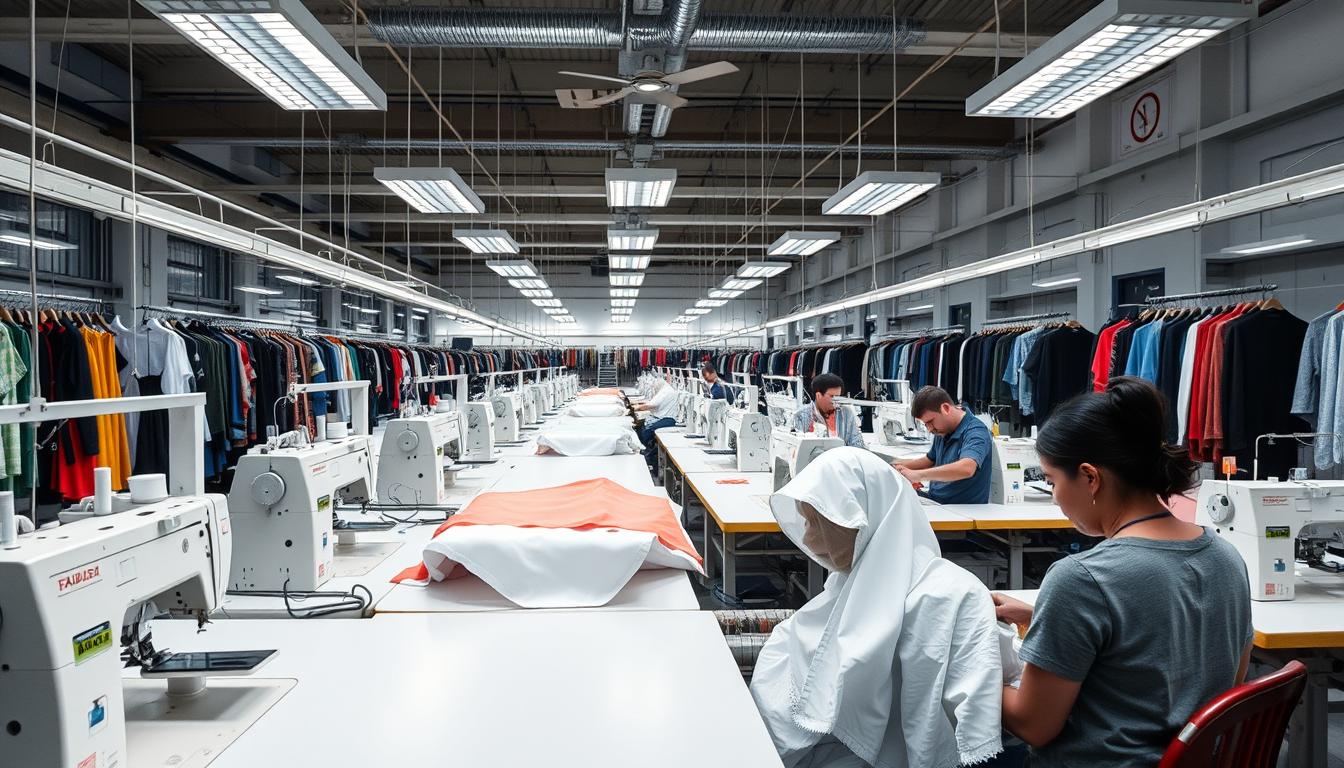
"Trust but verify." When manufacturing 8,000 km away, on-site quality control isn't optional—it's your only guarantee against defects, wrong colors, and costly re-production. Here's how professional QC protects your investment.
⚠️ The Cost of No QC:
Without quality control, 15-30% defect rates are common in Bangladesh. A 2,000-piece order with 25% defects = 500 unusable pieces = €2,500+ lost. Plus re-production costs and missed sales.
Why Quality Control Matters
The Distance Problem:
You're in Germany. Production is in Dhaka, Bangladesh—8,000 km away. You can't:
- Walk into the factory daily
- Check fabric quality in person
- Inspect stitching during production
- Catch mistakes before they multiply
Without on-site QC, you're flying blind. By the time defects reach you (8-12 weeks later), it's too late—and too expensive—to fix.
Common Quality Issues in Bangladesh:
- Fabric defects: Wrong GSM, color shade off, pilling
- Sizing errors: Measurements don't match spec sheet
- Construction flaws: Crooked seams, skipped stitches
- Print/embroidery issues: Misaligned, wrong placement
- Packaging mistakes: Wrong labels, missing tags
- Quantity discrepancies: Ordered 1,000, received 950
📊 Industry Data:
A 2023 study found 23% of Bangladesh apparel shipments had quality issues when no QC was performed. With professional QC, that drops to under 3%.
The 3 Stages of Quality Control
Stage 1: Fabric Inspection (Before Cutting)
When: As soon as fabric arrives at the factory
Why: Catch defects BEFORE cutting (once cut, fabric is wasted if defective)
What We Check:
- Color accuracy: Compare to approved lab dip or Pantone
- Fabric weight: Verify GSM matches order (180gsm, not 160gsm)
- Width & shrinkage: Test wash shrinkage rate
- Surface defects: Holes, snags, color streaks, pilling
- Hand feel: Softness and texture match sample
- Quantity: Ordered 2,000m, received 2,000m (not 1,800m)
🧵 Real Example:
Client ordered 180gsm cotton. Fabric arrived at 165gsm. Caught during inspection = fabric rejected and replaced. If not caught? 3,000 t-shirts would've been thinner than expected—bad reviews and returns inevitable.
Stage 2: During Production Inspection (DPI)
When: When 30-50% of production is complete
Why: Catch systematic errors early (before all 1,000 pieces are made wrong)
What We Check:
- Measurements: Compare finished samples to tech pack (chest, length, sleeve)
- Stitching quality: Straight seams, no loose threads
- Construction: Seam allowances, hem widths, collar shape
- Print/embroidery placement: Centered, correct size
- Trims & accessories: Correct buttons, zippers, labels
- Color consistency: All pieces same shade (no batch variation)
✅ DPI Success Story:
During-production check found chest width 2cm narrower than spec. Caught at 40% production = 400 pieces remade. If caught at final inspection? 1,000 pieces would've been wrong—€4,500 wasted.
Stage 3: Pre-Shipment Inspection (PSI) / Final AQL
When: When 100% of order is finished and packed
Why: Final check before shipping—your last chance to reject defects
What We Check:
- AQL sampling: Inspect statistically valid sample (explained below)
- Defect classification: Critical / Major / Minor
- Packaging: Correct poly bags, carton labeling, barcodes
- Quantity verification: Count pieces per carton, total cartons
- Accessories: Hangtags, care labels, size stickers attached
- Shipping marks: Correct address, PO number, SKU codes
Decision Point: Pass = approve shipment. Fail = re-work or reject batch.
Understanding AQL (Acceptable Quality Limit)
AQL is the international standard for garment quality inspection. It defines:
- How many pieces to inspect (sample size)
- How many defects are acceptable (pass/fail threshold)
AQL Levels Explained:
| AQL Level | Defect Rate | Typical Use |
| AQL 0.65 | 0.65% defects OK | Luxury brands |
| AQL 1.5 | 1.5% defects OK | Premium brands |
| AQL 2.5 | 2.5% defects OK | Standard (most common) |
| AQL 4.0 | 4% defects OK | Budget/fast fashion |
SupplyCloth Standard: We use AQL 2.5 by default, which means:
- ✓ Allows 2.5% minor defects (25 out of 1,000 pieces)
- ✓ Zero tolerance for critical defects (safety issues, wrong items)
- ✓ Minimal tolerance for major defects (unwearable flaws)
AQL Sampling: How Many Pieces We Inspect
AQL uses statistical sampling—we don't inspect every piece, but a representative sample:
| Order Size | Sample Size | % Inspected |
| 200-500 pcs | 50 pcs | 10-25% |
| 501-1,200 pcs | 80 pcs | 7-16% |
| 1,201-3,200 pcs | 125 pcs | 4-10% |
| 3,201-10,000 pcs | 200 pcs | 2-6% |
Defect Classification:
-
Critical Defects: Safety hazards or completely wrong items
- Example: Sharp needle left in garment, wrong product shipped
- Acceptable: 0 (instant fail)
-
Major Defects: Unwearable or significantly flawed
- Example: Holes, broken zippers, wrong size label, color mismatch
- Acceptable (AQL 2.5): Max 4 in sample of 125
-
Minor Defects: Cosmetic flaws that don't affect function
- Example: Loose thread, slight print imperfection, small stain
- Acceptable (AQL 2.5): Max 10 in sample of 125
Photo & Video Evidence: Real-Time Updates
Our Bangladesh team provides visual proof of inspections:
What You Receive:
- Fabric arrival photos: Fabric rolls, color comparison
- Lab test results: GSM, shrinkage, color fastness reports
- During-production photos: Sample pieces, measurements
- Pre-shipment video: Walkthrough of packed cartons
- AQL report with photos: Any defects found + severity classification
Why Visual Evidence Matters:
- ✓ Transparency: You see exactly what's happening
- ✓ Accountability: Factory knows we're documenting
- ✓ Dispute resolution: Photo proof if quality issues arise
- ✓ Peace of mind: Sleep well knowing production is monitored
📸 Real Example:
Client was nervous about their first Bangladesh order. We sent daily photos: fabric inspection ✅, first samples ✅, mid-production ✅, final packing ✅. Client felt in control despite being 8,000 km away.
The QC Timeline: When Inspections Happen
Typical Production Timeline with QC:
-
Week 1: Fabric arrives at factory
- → Fabric Inspection (Day 1-2)
- → Photos sent to you
- → Approve or reject fabric
-
Week 2-3: Cutting & sewing begins
- → During-Production Inspection (at 40% completion)
- → Photos of samples + measurements
- → Approve or request adjustments
-
Week 4-5: Production completes
- → Pre-Shipment AQL Inspection
- → Full AQL report with defect photos
- → Approve shipment or request rework
- Week 6: Shipment to Germany
What Happens If Inspection Fails?
Option 1: Rework (Minor Issues)
If defects are fixable (loose threads, missing labels), factory corrects them:
- Factory re-works defective pieces
- We re-inspect after rework
- Timeline delay: 3-7 days
- Cost: Factory absorbs (included in original quote)
Option 2: Partial Rejection (Mixed Quality)
If some pieces pass and some fail:
- We separate good pieces from defective
- Ship good pieces immediately
- Factory produces replacement batch for rejected pieces
- Cost: Negotiated (usually factory pays for replacements)
Option 3: Full Rejection (Major Failure)
If entire batch fails (wrong fabric, wrong color, critical defects):
- We reject shipment on your behalf
- Factory must reproduce entire order
- Timeline delay: 4-6 weeks
- Cost: Factory pays (contractually obligated)
💡 Why This Matters:
Without QC, you discover defects AFTER shipping (8 weeks + €1,500 shipping cost). With QC, we catch and fix before shipping—saving time and money.
Common Quality Issues & How We Prevent Them
Issue 1: Color Mismatch
Problem: Fabric color doesn't match approved sample
Prevention:
- Lab dip approval before bulk fabric order
- Physical color swatch comparison during fabric inspection
- Lighting conditions standardized (D65 light box)
Issue 2: Sizing Inconsistency
Problem: "Medium" varies by 3cm across batch
Prevention:
- Tech pack with precise measurements
- Sample approval before bulk production
- During-production measurement checks (every 50 pieces)
Issue 3: Print Placement
Problem: Logo off-center or wrong size
Prevention:
- Print strike-off approval (test print)
- First-piece inspection before full run
- Random checks during production
Issue 4: Fabric Defects
Problem: Holes, pilling, thin spots
Prevention:
- 4-point fabric inspection system
- Reject fabric rolls with >40 points/100m²
- Factory uses defect-free fabric or replaces
DIY QC vs Professional QC: The Cost-Benefit Analysis
| Scenario | DIY QC | SupplyCloth QC |
| Who inspects? | Factory "self-checks" | Independent 3rd party |
| Conflict of interest? | Yes (they want to pass) | No (we work for you) |
| Cost | €0 upfront | Included in service |
| Defect rate | 15-30% | Under 3% |
| Hidden costs | €2,500+ in defects | €0 (caught early) |
Bottom line: Professional QC costs you nothing extra (included in SupplyCloth's service) but saves thousands in avoided defects.
Conclusion: Quality is Your Brand Reputation
One batch of defective products can destroy years of brand-building:
- Bad reviews on Amazon/social media
- High return rates (eating into profits)
- Retailer bans (major stores drop you)
- Customer trust lost (hard to rebuild)
With SupplyCloth's 3-stage QC:
- ✅ Fabric inspected before cutting (prevent waste)
- ✅ During-production checks (catch errors early)
- ✅ Pre-shipment AQL inspection (final guarantee)
- ✅ Photo/video evidence (full transparency)
- ✅ Under 3% defect rate (vs 15-30% without QC)
Quality control isn't an expense—it's insurance against disaster. Protect your brand with professional QC from day one.
Get Production with Professional QC Included
Fabric inspection → During-production checks → AQL audit → Photo updates. All included.
Start Quality-Controlled Production